Skip to content

The Museum will be closing at 4 p.m. on Sunday, December 7 for a special event

Back to all

Hall of Great Westerners
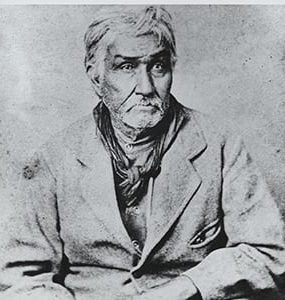
Jesse Chisholm
Inducted in 1974

Jesse Chisholm

1805 -1868

At Large, Oklahoma

Bio

Jesse Chisholm (circa 1805 – March 4, 1868) was a Scotch-Cherokee fur trader, merchant, and trailblazer in the American West. Best known for developing the Chisholm Trail, which became a major route for cattle drives from Texas to Kansas after the Civil War, Chisholm initially used the trail to supply his trading posts in Indian Territory, now Oklahoma. Working with Lenape guide Black Beaver, Chisholm contributed to several significant events in Texas and Oklahoma history.

Chisholm was born to a Scottish father and a Cherokee mother, making him part of the Cherokee matrilineal society. He moved to Indian Territory with his mother and grew up in Cherokee culture. Fluent in thirteen Native American languages, Chisholm became an interpreter and a key figure in treaty negotiations between Native American tribes and the Republic of Texas and the United States government.

Throughout his career, Chisholm worked as a trader, blazing trails and trading manufactured goods for peltry and cattle. His diplomatic efforts spanned over two decades, aiding in treaties and maintaining neutrality during the Civil War. After the war, he settled in present-day Oklahoma and built a road capable of carrying heavy wagons, which later became the famous Chisholm Trail.

Chisholm died in 1868 from food poisoning near Left Hand Spring in Oklahoma, where he was buried. His legacy lives on through the Chisholm Trail, a vital route in the American cattle trade.
Bio

Jesse Chisholm (circa 1805 – March 4, 1868) was a Scotch-Cherokee fur trader, merchant, and trailblazer in the American West. Best known for developing the Chisholm Trail, which became a major route for cattle drives from Texas to Kansas after the Civil War, Chisholm initially used the trail to supply his trading posts in Indian Territory, now Oklahoma. Working with Lenape guide Black Beaver, Chisholm contributed to several significant events in Texas and Oklahoma history.

Chisholm was born to a Scottish father and a Cherokee mother, making him part of the Cherokee matrilineal society. He moved to Indian Territory with his mother and grew up in Cherokee culture. Fluent in thirteen Native American languages, Chisholm became an interpreter and a key figure in treaty negotiations between Native American tribes and the Republic of Texas and the United States government.

Throughout his career, Chisholm worked as a trader, blazing trails and trading manufactured goods for peltry and cattle. His diplomatic efforts spanned over two decades, aiding in treaties and maintaining neutrality during the Civil War. After the war, he settled in present-day Oklahoma and built a road capable of carrying heavy wagons, which later became the famous Chisholm Trail.

Chisholm died in 1868 from food poisoning near Left Hand Spring in Oklahoma, where he was buried. His legacy lives on through the Chisholm Trail, a vital route in the American cattle trade.
More to Explore

Stay Connected

Sign up for our e-newsletter