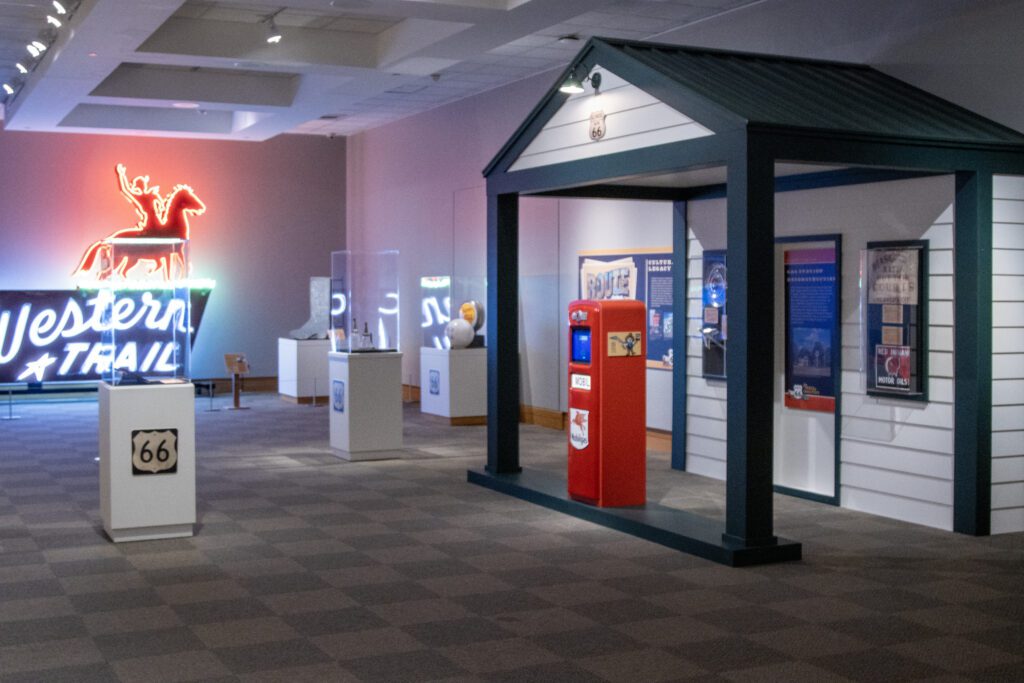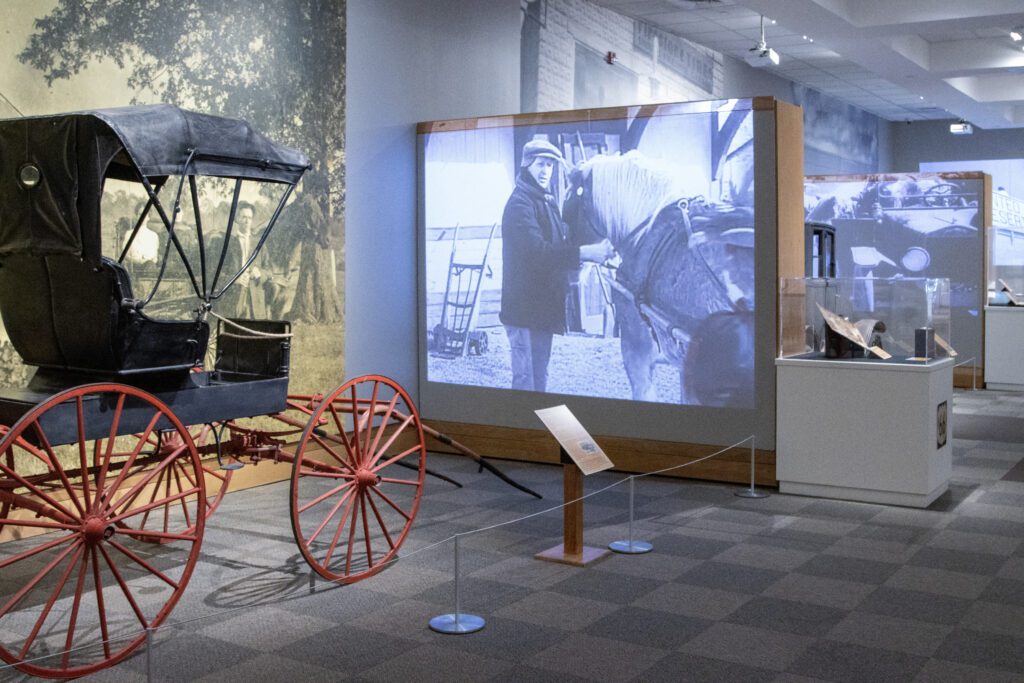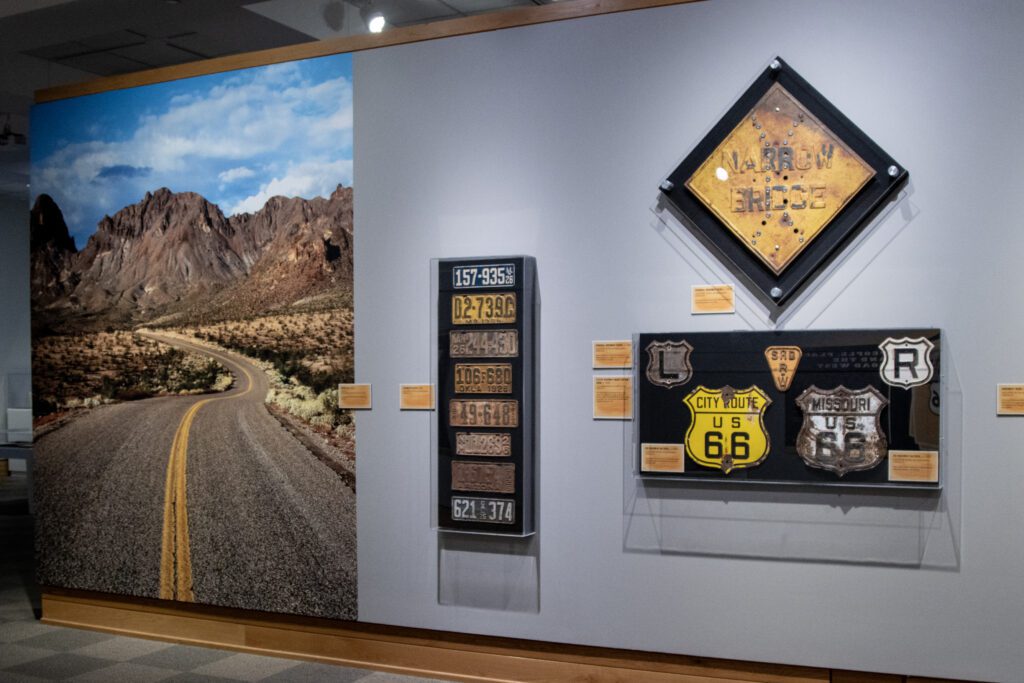




The story of the American West is, at its heart, a story about movement. Folks moving across a wide, wild stretch of land—different people, cultures, and communities all heading west for their own reasons. Over time, the push westward became less about wandering and more about building—building ways to get people and goods from here to there. And at the center of all that movement? The roads, rivers, rails, and trails that carved their way through this rugged land.
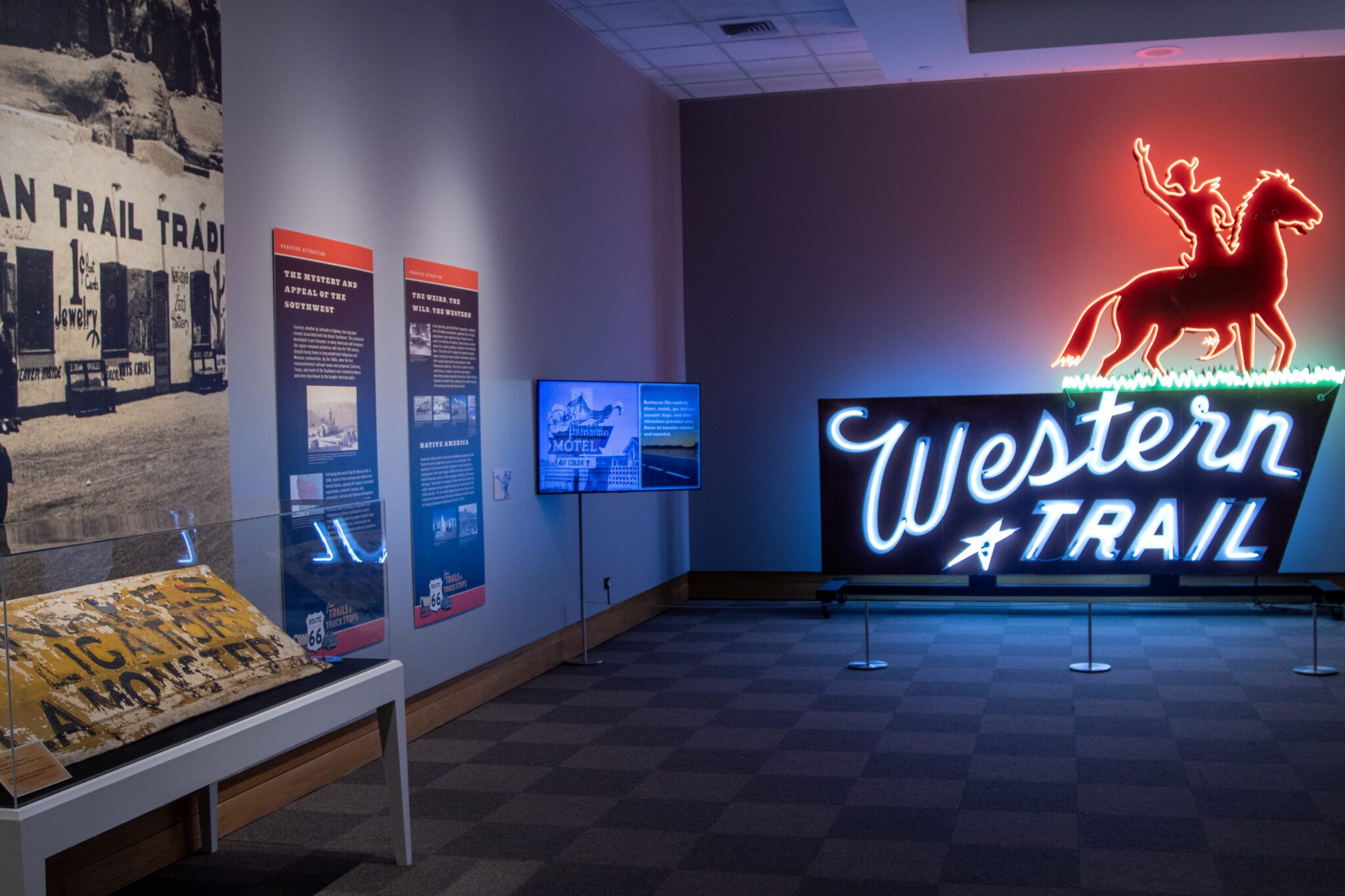
We tell that story in our new exhibition: Route 66: From Trails to Truck Stops.
CLICK HERE TO RESERVE YOUR ADMISSION TICKET NOW.
From horses and covered wagons to riverboats, steam engines, and long-haul trucks, every way we’ve moved through the West has become part of its legend. One of the most iconic routes of them all is Route 66—the “Mother Road,” as John Steinbeck famously called it in The Grapes of Wrath. Born in 1926, Route 66 was the first federally designated highway built for cars and trucks to stretch clear across the country. It wasn’t a brand-new road, but a patchwork quilt of older state and local roads, themselves laid over trails and railbeds from days gone by. She might have twisted and turned a bit more than other routes, but she got the job done, tying East to West for nearly 60 years, right up until she was officially retired in 1985.
But Route 66 was always more than just a road. By the 1950s, she came to stand for freedom, adventure, and that good old American spirit—especially the untamed spirit of the West. Even the original Cowboy Hall of Fame in Oklahoma City found its home along her winding path, right up on Persimmon Hill. And now, as we tip our hats to the centennial of this legendary highway, the legacy of the Mother Road still rolls on—carrying the spirit of the American West with it, wherever the wheels keep turning.
We partnered with Google Arts & Culture to tell some of the story of The Cowboy’s relationship with Route 66. You can see that online story below: