Back to all
Chester A. Reynolds Award

Awarded in 1993
Jo Curtis Flieger
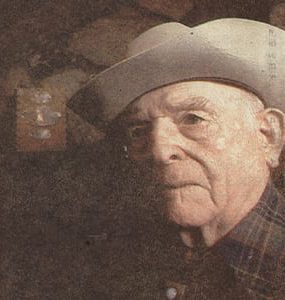
Jo Curtis Flieger lived a life shaped by horses, hard work, and the wide-open spaces of the West. Born in Canada, he grew up working on ranches where he learned to ride, rope, and care for livestock. It wasn’t long before he entered the world of rodeo—known across Canada as the “stampede”—where he proved himself not only as a competitor but also as a promoter and stock provider. Flieger raised bucking horses for rodeos and gained a reputation for bringing powerful, reliable stock to the arena.
His own riding skills were elite. Flieger won the famous Mountain Race at the Williams Lake Stampede in 1923, 1924, and 1926. The contest was notorious: a steep, dangerous descent down a mountain trail where only the boldest riders dared compete. In one year that Flieger raced, fourteen riders entered and only four finished. One rider and two horses were killed in the attempt—a measure of the courage and horsemanship required to win.
Adventure carried Flieger south when he joined a traveling Wild West show in the United States, performing as a stagecoach driver and trick rider on tours throughout the Southwest. The warm desert landscape made a lasting impression, and when the tour ended in 1929, he stayed in Arizona. He settled first in Winkelman, finding ranch work, then built his own operation near the Painted Cave in the Aravaipa region. Later, he and his wife, Gussie, purchased Cook’s Lake Farm along the San Pedro River, expanding their cattle and horse enterprises.
Flieger’s reputation grew throughout Arizona’s ranching and rodeo communities. Beyond competition, he became a builder of Western traditions. He played an important role in organizing Quarter Horse racing in Tucson and was a founding member of the Southern Arizona Horse Breeder’s Association. In 1948, he began breeding Santa Gertrudis cattle—a relatively new beef breed at the time—and helped establish the Arizona Santa Gertrudis Association in 1956, serving as both a charter member and director.
His life’s work spanned rodeo, livestock breeding, horse racing, and the promotion of Western heritage. For these contributions, Flieger received one of the highest honors in the West: the Chester A. Reynolds Award from the National Cowboy & Western Heritage Museum in Oklahoma City, recognizing individuals who embody the spirit, integrity, and ideals of the American cowboy.
In later years, Jo Flieger made his home in Oracle, Arizona. He remained a respected voice among cattlemen, horsemen, and rodeo hands until his passing in 1998. A true cowboy in every sense, his legacy lives on in the traditions, associations, and Western spirit he helped build.
Jo Curtis Flieger lived a life shaped by horses, hard work, and the wide-open spaces of the West. Born in Canada, he grew up working on ranches where he learned to ride, rope, and care for livestock. It wasn’t long before he entered the world of rodeo—known across Canada as the “stampede”—where he proved himself not only as a competitor but also as a promoter and stock provider. Flieger raised bucking horses for rodeos and gained a reputation for bringing powerful, reliable stock to the arena.
His own riding skills were elite. Flieger won the famous Mountain Race at the Williams Lake Stampede in 1923, 1924, and 1926. The contest was notorious: a steep, dangerous descent down a mountain trail where only the boldest riders dared compete. In one year that Flieger raced, fourteen riders entered and only four finished. One rider and two horses were killed in the attempt—a measure of the courage and horsemanship required to win.
Adventure carried Flieger south when he joined a traveling Wild West show in the United States, performing as a stagecoach driver and trick rider on tours throughout the Southwest. The warm desert landscape made a lasting impression, and when the tour ended in 1929, he stayed in Arizona. He settled first in Winkelman, finding ranch work, then built his own operation near the Painted Cave in the Aravaipa region. Later, he and his wife, Gussie, purchased Cook’s Lake Farm along the San Pedro River, expanding their cattle and horse enterprises.
Flieger’s reputation grew throughout Arizona’s ranching and rodeo communities. Beyond competition, he became a builder of Western traditions. He played an important role in organizing Quarter Horse racing in Tucson and was a founding member of the Southern Arizona Horse Breeder’s Association. In 1948, he began breeding Santa Gertrudis cattle—a relatively new beef breed at the time—and helped establish the Arizona Santa Gertrudis Association in 1956, serving as both a charter member and director.
His life’s work spanned rodeo, livestock breeding, horse racing, and the promotion of Western heritage. For these contributions, Flieger received one of the highest honors in the West: the Chester A. Reynolds Award from the National Cowboy & Western Heritage Museum in Oklahoma City, recognizing individuals who embody the spirit, integrity, and ideals of the American cowboy.
In later years, Jo Flieger made his home in Oracle, Arizona. He remained a respected voice among cattlemen, horsemen, and rodeo hands until his passing in 1998. A true cowboy in every sense, his legacy lives on in the traditions, associations, and Western spirit he helped build.