Back to all
Chester A. Reynolds Award

Awarded in 2001
Bob Marrs
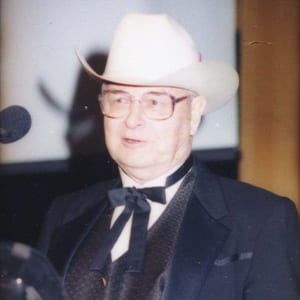
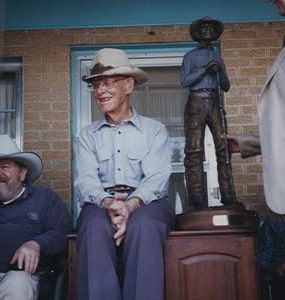
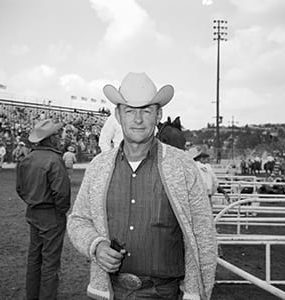
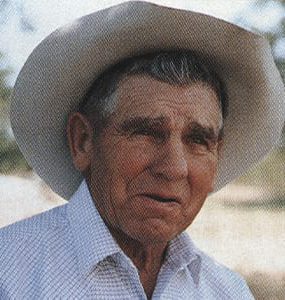
Born near Delaware, Oklahoma, Bob Marrs spent his early years cowboying across some of the most storied ranches in the American West. His work took him to the Ewing Halsell ranches in Lenapah, Oklahoma and Muleshoe, Texas; the Waggoner Ranch operations in Vernon, Texas and Mosquero, New Mexico; the VVV Ranch of Seligman, Arizona; the Rudineck Land and Cattle Company in Bakersfield and Weldon, California; and the M.T. Johnson Ranch in Alanreed, Texas.
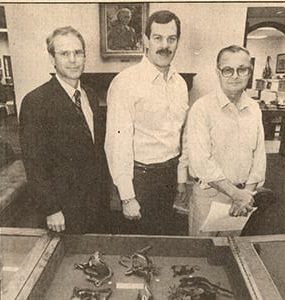
After serving his country in World War II, Marrs set his sights on the craft that would define his life. He studied leatherwork under Bill and Jack Oliver in Vernon, Texas. He continued to hone his skills with saddlemakers in Colorado, Oklahoma, and Texas—all while still working as a cowboy. In 1954, he purchased the Stockman’s Saddle Shop in the Amarillo stockyards, a business that became synonymous with high-quality Western gear. Marrs built saddles for working cowhands, rodeo champions, country musicians, and Western film stars, becoming one of the most decorated saddlemakers in the West. He semi-retired in 1992, though the demand for his work never faded.
Marrs’ craftsmanship earned numerous honors: the Academy of Western Artists’ Don King Lifetime Saddlemaker Award (2006) and its annual saddlemaker award (1996); the Chester A. Reynolds Award from the National Cowboy & Western Heritage Museum (2001); the Western Heritage Award from the Big Bend Museum in Alpine, Texas; and a Western Heritage Award from Amarillo Range Riders (1999). Of all his achievements, Marrs considered his greatest honor the opportunity to build the “Top Hand” saddle for the Texas Ranch Roundup in Wichita Falls for 18 straight years.
“Every saddle I make, I try to make better than the last one,” he once said. “It’s just work I enjoy. Cowboyin’ was my favorite thing to do, but I got into saddlemaking. They kind of go together.”
Bob Marrs lived his life at the intersection of craft and cowboy tradition, preserving the heritage of the working saddle with every piece he built.
Born near Delaware, Oklahoma, Bob Marrs spent his early years cowboying across some of the most storied ranches in the American West. His work took him to the Ewing Halsell ranches in Lenapah, Oklahoma and Muleshoe, Texas; the Waggoner Ranch operations in Vernon, Texas and Mosquero, New Mexico; the VVV Ranch of Seligman, Arizona; the Rudineck Land and Cattle Company in Bakersfield and Weldon, California; and the M.T. Johnson Ranch in Alanreed, Texas.
After serving his country in World War II, Marrs set his sights on the craft that would define his life. He studied leatherwork under Bill and Jack Oliver in Vernon, Texas. He continued to hone his skills with saddlemakers in Colorado, Oklahoma, and Texas—all while still working as a cowboy. In 1954, he purchased the Stockman’s Saddle Shop in the Amarillo stockyards, a business that became synonymous with high-quality Western gear. Marrs built saddles for working cowhands, rodeo champions, country musicians, and Western film stars, becoming one of the most decorated saddlemakers in the West. He semi-retired in 1992, though the demand for his work never faded.
Marrs’ craftsmanship earned numerous honors: the Academy of Western Artists’ Don King Lifetime Saddlemaker Award (2006) and its annual saddlemaker award (1996); the Chester A. Reynolds Award from the National Cowboy & Western Heritage Museum (2001); the Western Heritage Award from the Big Bend Museum in Alpine, Texas; and a Western Heritage Award from Amarillo Range Riders (1999). Of all his achievements, Marrs considered his greatest honor the opportunity to build the “Top Hand” saddle for the Texas Ranch Roundup in Wichita Falls for 18 straight years.
“Every saddle I make, I try to make better than the last one,” he once said. “It’s just work I enjoy. Cowboyin’ was my favorite thing to do, but I got into saddlemaking. They kind of go together.”
Bob Marrs lived his life at the intersection of craft and cowboy tradition, preserving the heritage of the working saddle with every piece he built.