






Skip to content

The American Rodeo Gallery is closed for renovation.
Prosperity Junction will be closed to guests April 8, 9 and 10. 

The Cowboy: An Immersive Journey

CLOSING SOON!

Back to all

Hall of Great Westerners
. Sacagawea
Inducted in 1959

. Sacagawea

1788-1884

At Large

Bio

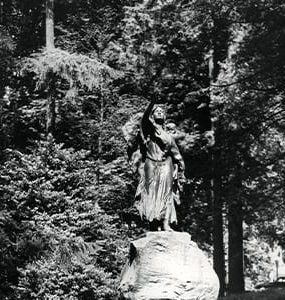
Sacagawea (c. 1788 – c. 1812) was a Lemhi Shoshone woman who played a crucial role in the Lewis and Clark Expedition (1804–1806), becoming an enduring symbol of strength, courage, and guidance in American history. Born near present-day Salmon, Idaho, Sacagawea was captured by the Hidatsa tribe as a young girl and later sold into marriage to Toussaint Charbonneau, a French-Canadian trapper.

In 1804, Charbonneau was hired by Meriwether Lewis and William Clark as a guide for their expedition to explore the newly acquired Louisiana Territory and find a route to the Pacific Ocean. Sacagawea, then pregnant with her first child, joined the journey as an interpreter, a decision that proved invaluable. During the expedition, she gave birth to her son, Jean Baptiste, and continued to travel with the group, often carrying her infant on her back.

Sacagawea’s knowledge of the land, languages, and native tribes proved essential for the expedition’s success. She facilitated negotiations for horses, provided geographical insight, and helped ensure the group’s safety through her presence, signaling peaceful intentions to other tribes.

Her most notable contribution came when the expedition reached her native Shoshone tribe, where she recognized her brother, Chief Cameahwait. This connection secured the crucial horses needed to cross the Rocky Mountains.

Though little is known about Sacagawea’s later life, she is believed to have died around 1812. Her legacy endures as a symbol of resilience and exploration, honored through statues, monuments, and U.S. currency.
Bio

Sacagawea (c. 1788 – c. 1812) was a Lemhi Shoshone woman who played a crucial role in the Lewis and Clark Expedition (1804–1806), becoming an enduring symbol of strength, courage, and guidance in American history. Born near present-day Salmon, Idaho, Sacagawea was captured by the Hidatsa tribe as a young girl and later sold into marriage to Toussaint Charbonneau, a French-Canadian trapper.

In 1804, Charbonneau was hired by Meriwether Lewis and William Clark as a guide for their expedition to explore the newly acquired Louisiana Territory and find a route to the Pacific Ocean. Sacagawea, then pregnant with her first child, joined the journey as an interpreter, a decision that proved invaluable. During the expedition, she gave birth to her son, Jean Baptiste, and continued to travel with the group, often carrying her infant on her back.

Sacagawea’s knowledge of the land, languages, and native tribes proved essential for the expedition’s success. She facilitated negotiations for horses, provided geographical insight, and helped ensure the group’s safety through her presence, signaling peaceful intentions to other tribes.

Her most notable contribution came when the expedition reached her native Shoshone tribe, where she recognized her brother, Chief Cameahwait. This connection secured the crucial horses needed to cross the Rocky Mountains.

Though little is known about Sacagawea’s later life, she is believed to have died around 1812. Her legacy endures as a symbol of resilience and exploration, honored through statues, monuments, and U.S. currency.
More to Explore

Stay Connected

Sign up for our e-newsletter