





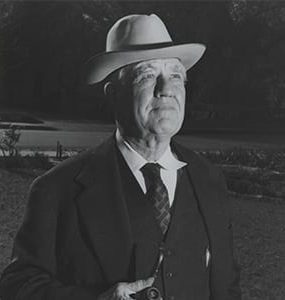
Bio
James Frank Dobie (1888–1964) was a prominent American folklorist, writer, and newspaper columnist known for his works celebrating the traditions of rural Texas and its open-range culture. Raised on a ranch in Live Oak County, Texas, Dobie developed a passion for storytelling early in life. He attended Southwestern University, where he began cultivating his love for writing, later pursuing a master’s degree at Columbia University.
After serving in World War I, Dobie returned to Texas, working at the University of Texas at Austin and becoming deeply involved with the Texas Folklore Society. His early writings focused on Texas ranch life and southwestern folklore, notably preserving stories about the region’s vanishing traditions. His first book, A Vaquero of the Brush Country (1929), established him as an authentic voice in western literature.
Dobie published many celebrated works throughout his career, including Coronado’s Children (1931) and The Longhorns (1941). He also became a vocal critic of Texas politics, using his newspaper column to advocate for individual liberties and decry what he saw as the state’s political and social shortcomings.
In his later years, President Lyndon B. Johnson honored Dobie with the Medal of Freedom. After his death in 1964, his ranch, Paisano, was turned into a writers’ retreat, preserving his legacy as a champion of Texas culture and folklore.