Skip to content

The Museum will be closed all day Friday, December 19, for a special event.

Back to all

Hall of Great Westerners
Olaf Wieghorst
Inducted in 1992

Olaf Wieghorst

1899-1988

Arizona

Bio

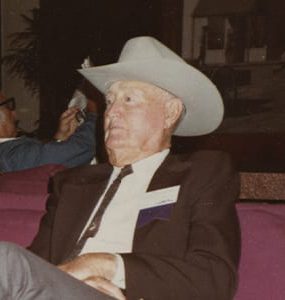
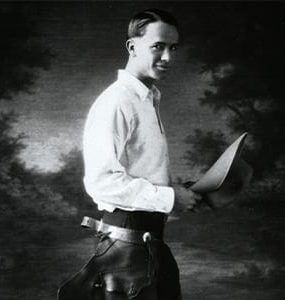
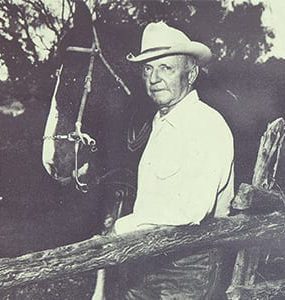
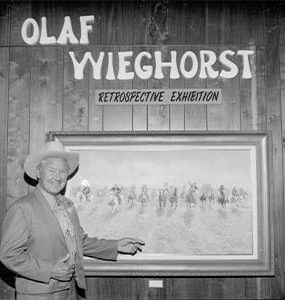
Olaf Wieghorst (1899–1988) was a Danish-American painter renowned for his depictions of the American frontier, often compared to the work of Frederic Remington and Charles Russell. Born in Viborg, Denmark, Wieghorst grew up working on a farm and performing as a bareback rider in the Schumann Circus. At age 19, he emigrated to the United States in 1918, where he became captivated by Western culture.

Wieghorst’s early career included serving with the U.S. Cavalry’s 7th Regiment and working as a cowboy, experiences that heavily influenced his artwork. His sketches and paintings of Western scenes were often featured in magazines like Zane Grey’s Western Magazine and Hoofs and Horns. In 1924, Wieghorst joined the New York City Police Department, where he served in the Mounted Unit, training horses. He retired in 1944 and relocated to El Cajon, California, where he focused on his art full-time.

A self-taught artist, Wieghorst mastered oil painting and watercolor techniques, specializing in scenes of the American West and horses. His works were widely celebrated, with galleries like Grand Central Art Galleries showcasing his paintings. His models included famous horses like Gene Autry’s Champion and Roy Rogers’ Trigger. Wieghorst also appeared in two John Wayne films, McLintock! (1963) and El Dorado (1966).

In 1985, two of his works sold for over $1 million. He was inducted into the Hall of Great Westerners in 1992, and his legacy endures as one of the foremost artists of the American frontier.
Bio

Olaf Wieghorst (1899–1988) was a Danish-American painter renowned for his depictions of the American frontier, often compared to the work of Frederic Remington and Charles Russell. Born in Viborg, Denmark, Wieghorst grew up working on a farm and performing as a bareback rider in the Schumann Circus. At age 19, he emigrated to the United States in 1918, where he became captivated by Western culture.

Wieghorst’s early career included serving with the U.S. Cavalry’s 7th Regiment and working as a cowboy, experiences that heavily influenced his artwork. His sketches and paintings of Western scenes were often featured in magazines like Zane Grey’s Western Magazine and Hoofs and Horns. In 1924, Wieghorst joined the New York City Police Department, where he served in the Mounted Unit, training horses. He retired in 1944 and relocated to El Cajon, California, where he focused on his art full-time.

A self-taught artist, Wieghorst mastered oil painting and watercolor techniques, specializing in scenes of the American West and horses. His works were widely celebrated, with galleries like Grand Central Art Galleries showcasing his paintings. His models included famous horses like Gene Autry’s Champion and Roy Rogers’ Trigger. Wieghorst also appeared in two John Wayne films, McLintock! (1963) and El Dorado (1966).

In 1985, two of his works sold for over $1 million. He was inducted into the Hall of Great Westerners in 1992, and his legacy endures as one of the foremost artists of the American frontier.
More to Explore

Stay Connected

Sign up for our e-newsletter