



Howdy folks, it’s the third week of November 2026, and welcome to This Week in The West.
I’m Seth Spillman, broadcasting from the National Cowboy & Western Heritage Museum in Oklahoma City.
On this podcast, we share stories of the people and events that shaped the history, art and culture of the American West—and those still shaping it today.
It was this week, 140 years ago, when the weather first turned bleak across the northern Great Plains.
On November 22 and 23, 1886, the season’s first major blizzard swept across the open range. Snow fell, winds howled and temperatures plunged. Cattle struggled to reach grass beneath the accumulating snow.
For the cowboys and ranchers of Montana, Wyoming and Dakota Territory, it was an ominous beginning to what would become one of the most devastating winters in Western history.
And that late November storm was only the beginning. Over the next several months, repeated blizzards, bitter cold and widespread starvation killed hundreds of thousands of cattle, ruined many ranchers and hastened the decline of the great open-range cattle boom.
History would remember the catastrophe as the Big Die-Up.
The high stakes and tragedy of the Die-Up started with the cattle boom of the late nineteenth century.
After the Civil War, the American cattle industry expanded rapidly. Millions of cattle were driven north from Texas along famous trails like the Chisholm and Western.
Railroads connected Western cattle operations with growing markets in the East and helped feed what seemed like an unlimited demand for beef.
The northern Great Plains offered enormous expanses of grassland. Ranchers established sprawling operations across Montana, Wyoming and the Dakotas, while investors from the eastern United States and Europe poured money into what looked like a sure thing.
The formula seemed nearly foolproof: buy cattle, turn them loose on the open range and let them graze until they were ready for market.
Many ranchers believed the native grasses could sustain their herds year-round. After several relatively mild winters during the early 1880s, there seemed little reason to spend heavily on hay or shelters.
The open-range cattle business seemed unstoppable. But beneath that prosperity, serious problems were developing.
By the middle of the decade, too many cattle were grazing too little land.
Then the summer of 1886 brought drought and scorching heat. Grasslands and streams dried up, and wildfires consumed more forage. By autumn, many cattle were already hungry and weak.
Then came the blizzard of November 22 and 23.
Snow blanketed the land, covering what little grass remained and making it harder for cattle to feed.
Unlike modern ranch operations, where livestock can be gathered, sheltered and supplied with hay, most cattle on the open range were left largely to fend for themselves.
As winter deepened, conditions grew worse.
Storm followed storm. Brief thaws softened the snow, only for renewed cold to follow, sealing the range beneath layers of ice.
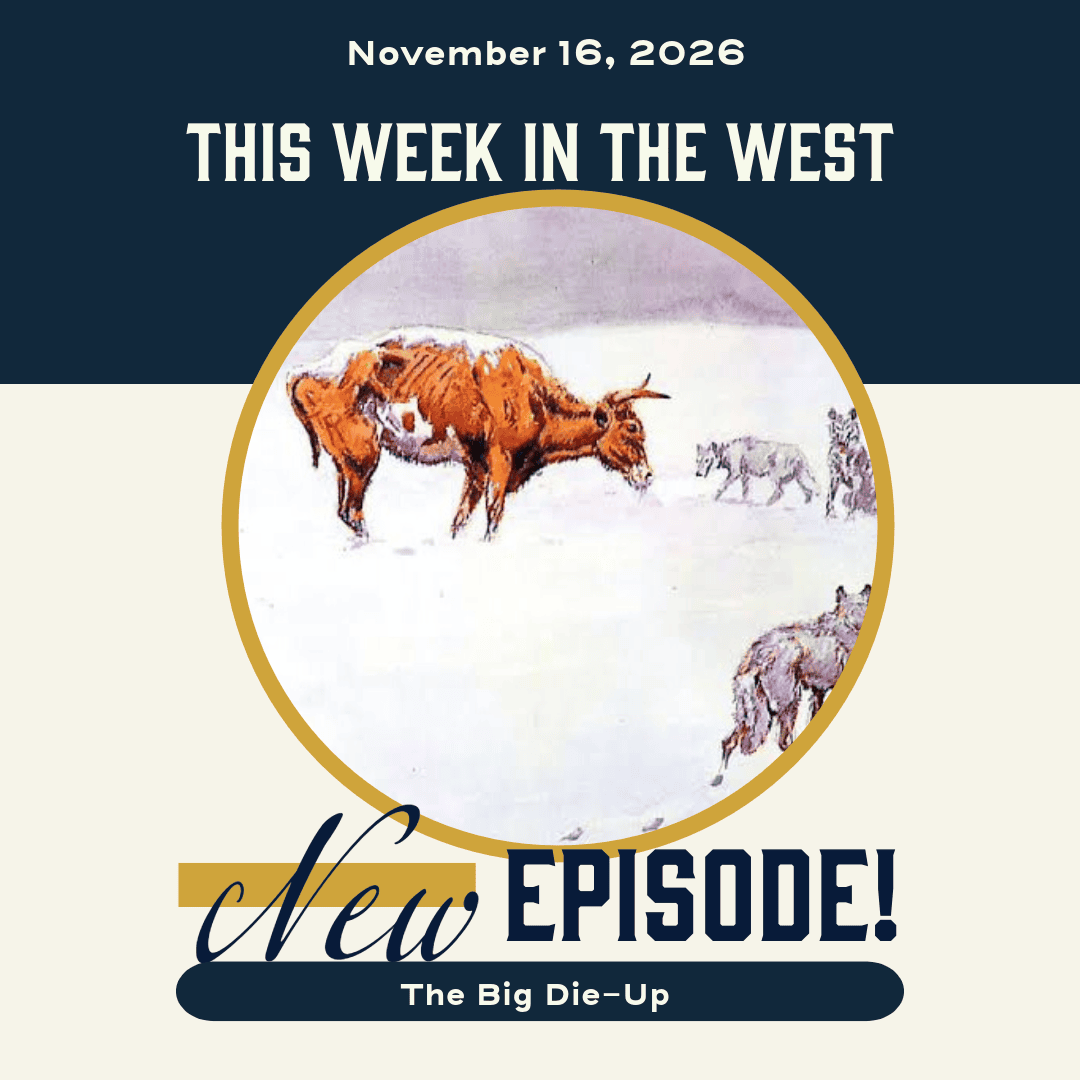
Cattle pawed at frozen crust, searching for grass, but many were too weak to break through.
Driven by wind, they drifted across the plains looking for shelter.
Some crowded into ravines and were buried by snowdrifts. Others piled against fences or collapsed from exhaustion.
Cowboys searching for their herds faced blinding snow, deadly cold and the danger of becoming lost themselves.
The worst weather came in January and February of 1887.
In central Montana, temperatures reportedly fell as low as 46 degrees below zero. In the Dakota Badlands, cattle died by the tens of thousands.
One of the ranchers caught up in the disaster was a young Dakota rancher named Theodore Roosevelt.
Long before becoming the twenty-sixth president of the United States, Roosevelt had invested heavily in cattle ranching in the Dakota Badlands.
He held interests in two operations, the Maltese Cross and Elkhorn ranches near Medora. The winter of 1886 and 1887 devastated both.
Roosevelt was honeymooning in Europe during the worst of the winter. When he returned to the Badlands that spring, he found that roughly 60 percent of his cattle had been lost.
But Roosevelt was hardly alone.
Across the northern plains, ranching enterprises collapsed.
The National Park Service estimates that one-third to one-half of all cattle on the northern plains died, while losses in some places reached 60 to 95 percent.
The full scale of the catastrophe did not become clear until spring.
In March 1887, warm winds began melting the accumulated snow. What emerged was a horrifying sight.
Thousands upon thousands of dead cattle littered the plains, filled creek beds and crowded riverbanks. Carcasses floated downstream with the spring runoff.
For ranchers who had invested their savings and futures in cattle, the devastation was almost beyond comprehension.
Many operations went bankrupt. Investors lost fortunes, and cowboys lost jobs as the herds they had tended disappeared.
The Big Die-Up did more than kill cattle. It exposed the risks of the open-range business model.
The belief that enormous herds could survive indefinitely on unfenced public grasslands had been shattered. Ranchers increasingly turned to smaller, more carefully managed herds. They fenced pastures, raised and stored hay and developed more reliable sources of water and shelter.
They also worked to breed cattle better suited to local conditions.
The open range didn’t vanish in a single winter. Cowboys kept riding, roping, and working cattle, and other forces—including homesteading and barbed wire—kept reshaping the range.
But the vast cattle empires of the early 1880s never returned in quite the same form.
And with that, we’ve weathered another episode of “This Week in the West.”
Our show is produced by Chase Spivey and written by Mike Koehler.
Follow us and rate us on Apple Podcasts or wherever you hear us. That helps us reach more people. Come visit us in Oklahoma City! You can buy tickets online at thecowboy.org/tickets.
Got a question or a suggestion? Drop us an email at podcast@thecowboy.org.
We leave you today with the words of Granville Stuart, a Montana cattleman and member of our Hall of Great Westerners, who wrote after the Big Die-Up: “A business that had been fascinating to me before suddenly became distasteful. I wanted no more of it. I have never wanted to own again an animal that I could not feed or shelter.”
Much obliged for listening, and remember, come Find Your West at the National Cowboy & Western Heritage Museum.