



Howdy folks, it’s the third week of July 2026, and welcome to This Week in The West.
I’m Seth Spillman, broadcasting from the National Cowboy & Western Heritage Museum in Oklahoma City.
On this podcast, we share stories of the people and events that shaped the history, art and culture of the American West—and those still shaping it today.
We try our best on this podcast to avoid the strong pull of the myths and cliches of the Quote-Wild West.
But sometimes those iconic moments grow from a seed of truth.
Take, for example, one of the most familiar images in Western lore: the gunfight showdown.
Two men stand facing each other in the middle of a dusty street. Their hands hover over their revolvers. A crowd watches from a safe distance. Then, in a flash, guns are drawn, shots are fired, and one man falls.
It’s a scene played over and over in countless movies, television shows and dime novels.
But in reality, that kind of showdown was actually very rare in the real American West.
Most frontier violence wasn’t neat, dramatic or honorable. It usually happened during drunken arguments, gambling disputes or surprise attacks. Men were far more likely to be ambushed than to politely face each other in a formal duel.
But there is one famous gunfight that came remarkably close to the Hollywood version.
We remember it today, the week that it happened: July 21, 1865, in Springfield, Missouri.
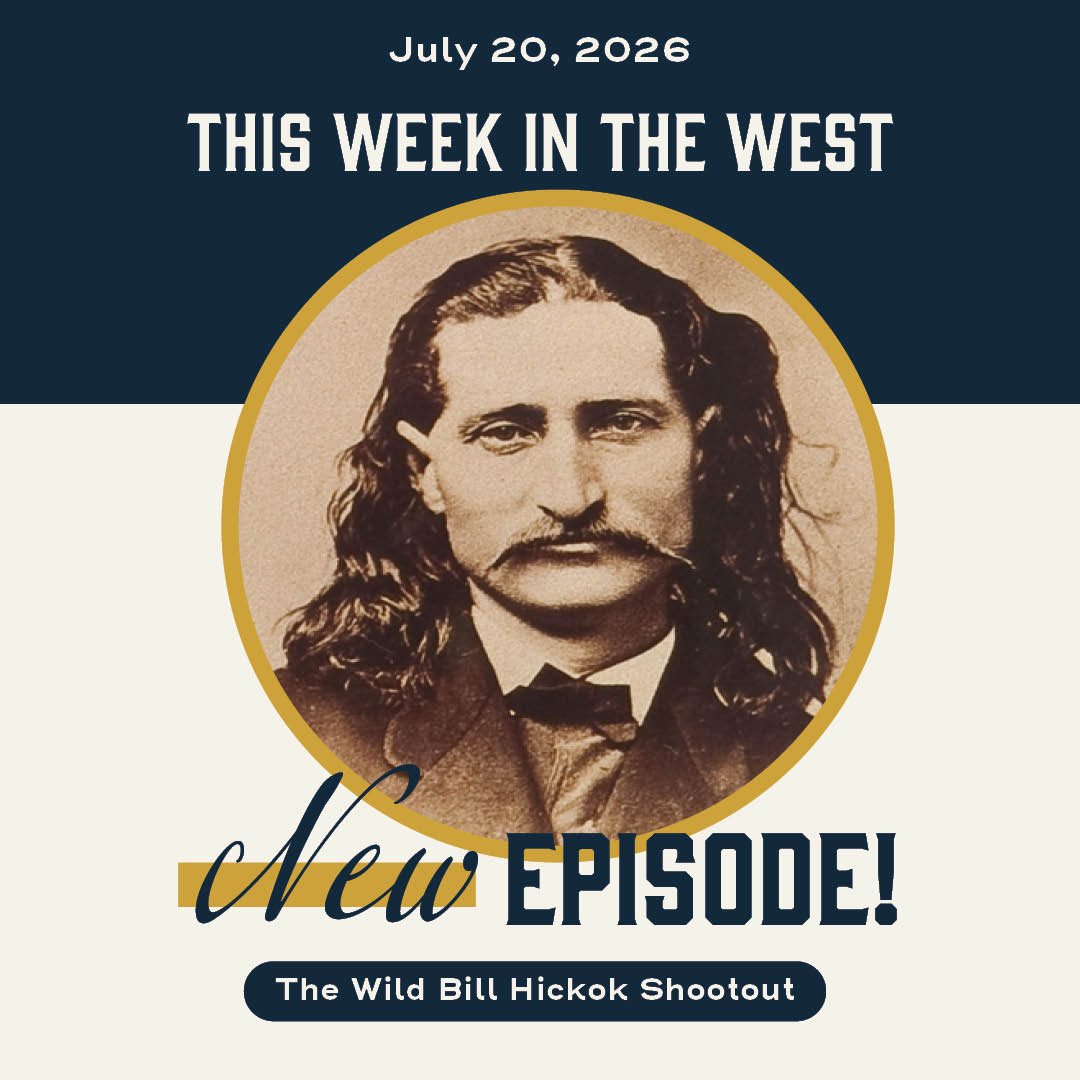
And the key player in the story is none other than Wild Bill Hickok.
The event is remembered today as the Hickok-Tutt shootout. It became the model for nearly every fictional gunfight that followed. Yet when we look past the legend, we find a story that reveals much about violence, honor and reputation on the nineteenth-century frontier.
James Butler Hickok—better known as Wild Bill—had served as a scout for the Union Army during the Civil War. By 1865, he was living in Springfield and making a living as a gambler.
His opponent was Davis, or Dave, Tutt, a former Confederate soldier from Arkansas who had also settled in Springfield after the war. Despite serving on opposite sides during the conflict, the two men were once friends. But sometime during the summer of 1865, that friendship soured.
Some stories claim they argued over a woman. The most reliable accounts suggest the conflict grew out of a poker game and a dispute over money.
In those days, a gambler’s reputation was his livelihood. Publicly questioning a man’s honesty—or his ability to pay his debts—could destroy his standing overnight. That’s exactly what happened during a card game at Springfield’s Lyon House Hotel.
Hickok and Tutt argued over a debt. Hickok believed he owed less money than Tutt claimed. The disagreement may have involved as little as ten dollars, but the amount mattered less than the principle.
During the argument, Tutt took one of Hickok’s prized possessions: a gold pocket watch.
He announced that he would keep it until Hickok paid the debt in full.
To modern ears, that may not sound like much. But in 1865, it suggested that Hickok couldn’t pay his debts and couldn’t defend his property.
Over the next day, tension continued to build.
Witnesses later recalled hearing discussions about whether Tutt intended to wear Hickok’s watch openly in the town square. Hickok warned that he did not want to see that happen.
Neither man seemed willing to back down.
By the evening of July 21, the stage was set.
Around six o’clock, the two men found themselves on opposite sides of Springfield’s public square.
Unlike the crowded streets we see in Western films, eyewitnesses reported that bystanders quickly moved out of the way once they realized armed men were facing each other. Nobody wanted to be caught in the crossfire.
The two men stood roughly 75 yards apart—a surprisingly long distance for a pistol duel.
Hickok reportedly called out a warning: “Don’t come any closer, Dave.”
Tutt ignored it.
Then both men reached for their revolvers.
The shots came almost simultaneously.
Tutt fired first, according to many witnesses, but his shot missed.
Hickok’s bullet struck Tutt in the chest, right between his ribs.
Tutt staggered away and reportedly cried out, “Boys, I’m killed.”
Moments later, he collapsed and died.
So, was this murder or was it self-defense?
Authorities arrested Hickok and charged him with manslaughter.
Today, many people assume a shooting like this would automatically lead to a conviction. But frontier justice was different. The American West had inherited some ideas from the older European tradition of dueling. While formal duels had largely disappeared by the mid-1800s, many people still believed a man had the right to defend himself after a public challenge and defend his life against an armed aggressor.
At trial, witnesses testified about the events leading up to the shooting. The jury heard evidence that Tutt had publicly humiliated Hickok by taking and displaying the watch. Several witnesses also indicated that Tutt reached for his weapon first.
After only a brief deliberation, the jury found Hickok not guilty.
The verdict wasn’t universally popular, but many viewed the confrontation as a “fair fight.”
More importantly, the trial transformed Wild Bill Hickok from a local gambler into a national celebrity.
A few years later, magazine writer George Ward Nichols published a dramatic account of Hickok’s life in Harper’s Monthly Magazine. The article exaggerated many details and helped create the larger-than-life legend of Wild Bill. Soon, readers across America were hearing stories of the fearless gunfighter who had faced down an enemy in the middle of a town square.
The confrontation became the blueprint for generations of storytellers. Novelists borrowed it. Filmmakers copied it. Television Westerns repeated it just about every week.
All the icons filled the role at some point. Marshal Matt Dillon. Clint Eastwood’s The Man with No Name. Even Marty McFly.
The showdown became one of the defining symbols of the Wild West in popular culture. But it really had its origins in the gritty reality of wounded pride, gambling debts and a disagreement over a pocket watch.
And as for Wild Bill Hickok, his own story would end in a much less romantic fashion.
Eleven years later, in 1876, he was playing cards in Deadwood, Dakota Territory, when a gunman walked up behind him and shot him in the back of the head.
No showdown. No warning. No dramatic duel.
Just the kind of sudden violence that was far more common.
The cards Hickok supposedly held at the moment of his death—two black aces and two black eights—became famous as the “Dead Man’s Hand.”
And with that, we’ve laid down our cards on another episode of “This Week in the West.”
Our show is produced by Chase Spivey and written by Mike Koehler.
Follow us and rate us on Apple Podcasts or wherever you hear us. That helps us reach more people.
Come visit us in Oklahoma City! You can now buy tickets online at thecowboy.org/tickets
Got a question or a suggestion? Drop us an email at podcast@thecowboy.org
We leave you today with the words of historian James D. McLaird: “Hickok angered too quickly, and he drew his guns too fast. He seemed to lack the ability to assess a situation and defuse tension, escalating conflict instead. Add to this equation his propensity to exaggerate, brag, and dress flamboyantly, and the reality stands in startling contrast to mythologizers’ depictions of him as a calm, collected gunfighter.”
Much obliged for listening, and remember, come Find Your West at the National Cowboy & Western Heritage Museum.