





Howdy folks, it’s the first week of November 2025, and welcome to This Week in The West.
I’m Seth Spillman, broadcasting from the National Cowboy & Western Heritage Museum in Oklahoma City.
On this podcast, we share stories of the people and events that shaped the history, art and culture of the American West—and those still shaping it today.
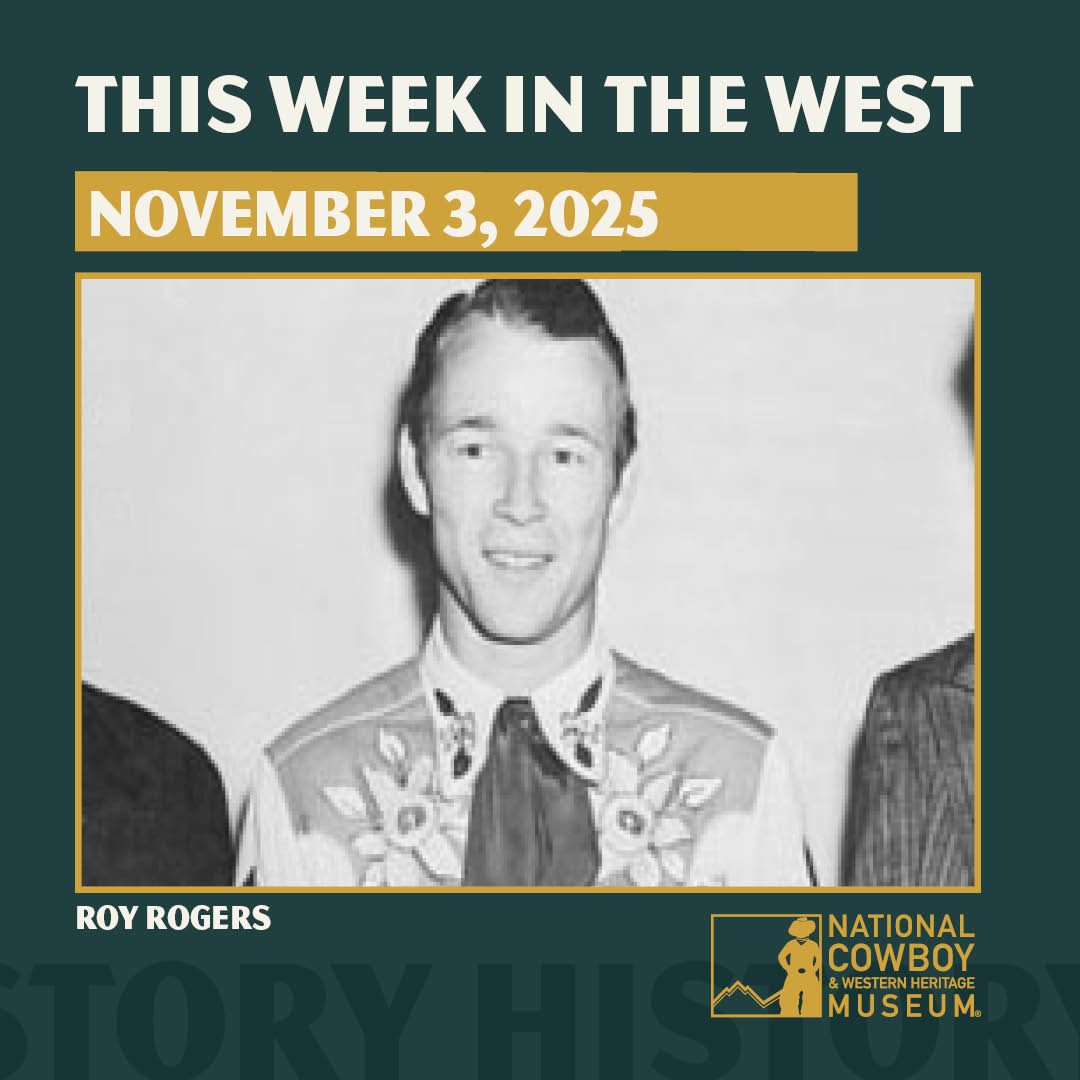
Meet Leonard Franklin Slye.
Len, as he was called, was born into poverty in Ohio, spending his earliest years on a houseboat that traveled up the Ohio River.
His family moved around the state and eventually settled on a farm. But the Great Depression hit hard.
Soon, the teenage Leonard helped his family pack everything into a 1923 Dodge and head west, hoping California would offer better prospects. Work was scarce there, too. He picked fruit and lived in camps much like those depicted in Steinbeck’s The Grapes of Wrath.
But during those quiet nights on the farm and in the camps, Len found something else. He picked up a mandolin, learned to sing and taught himself to yodel.

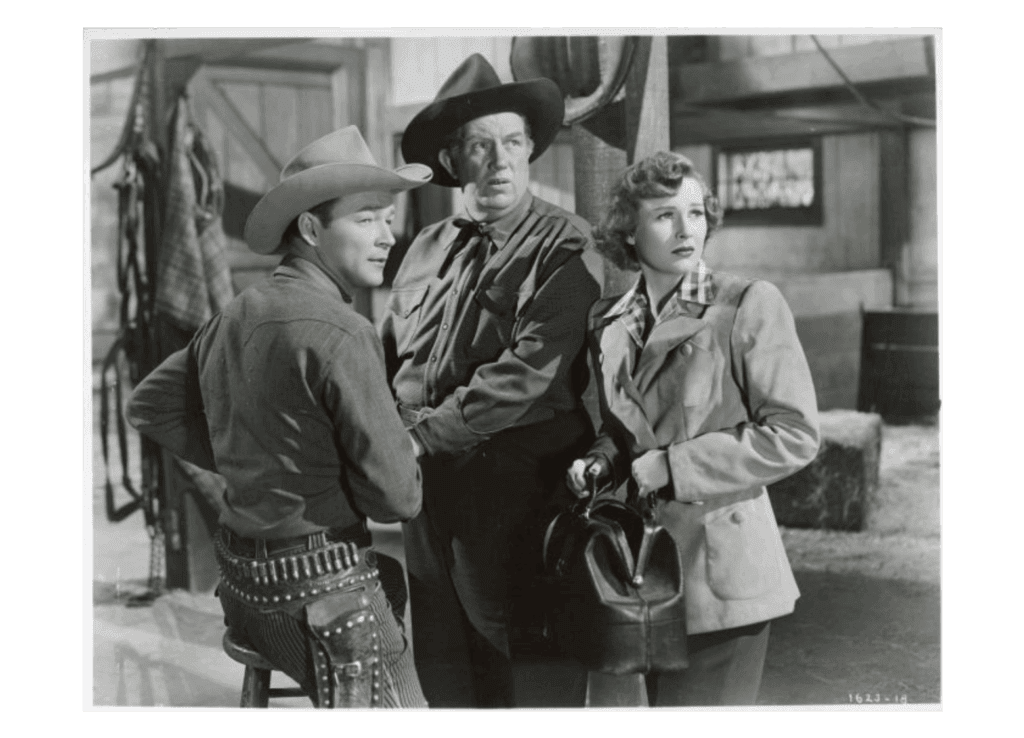
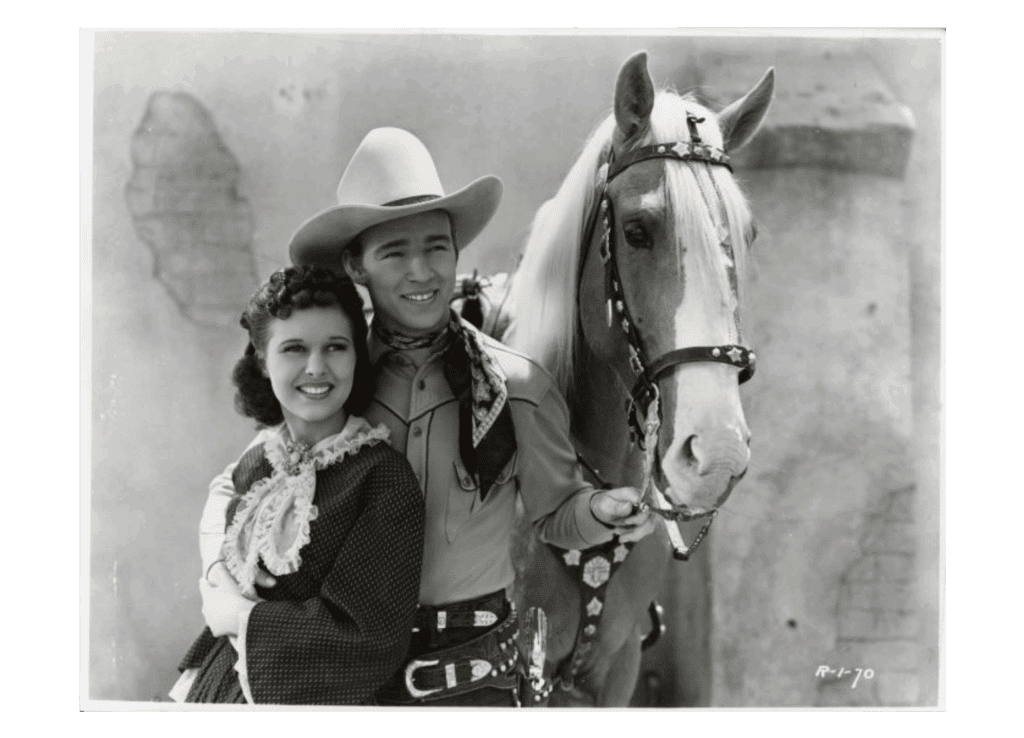
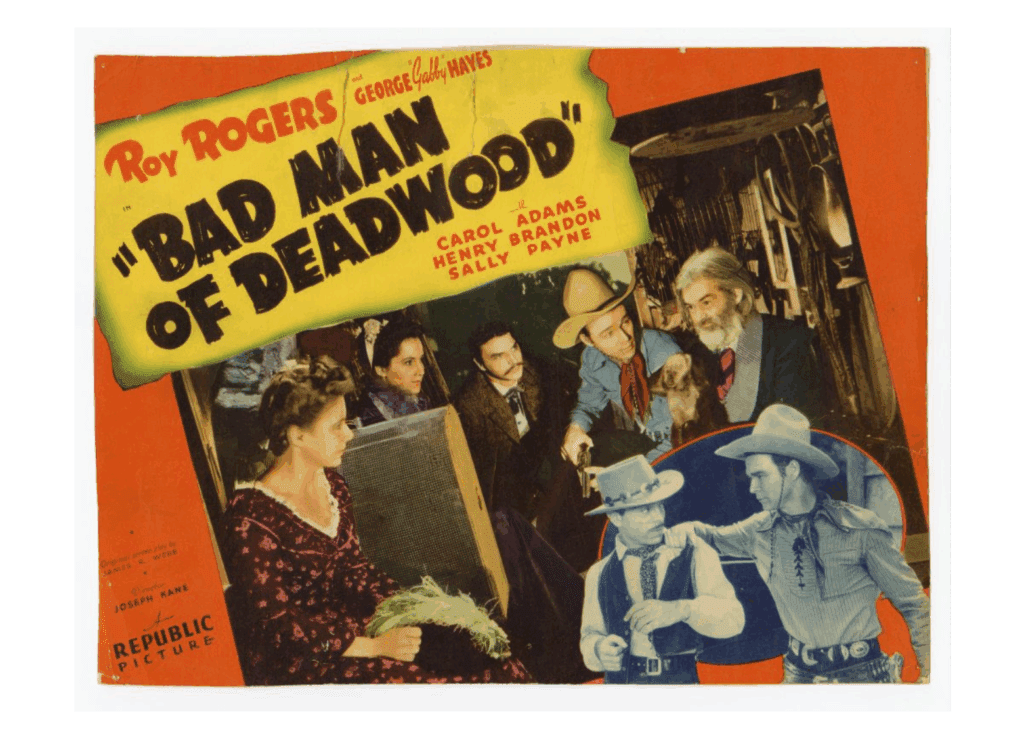
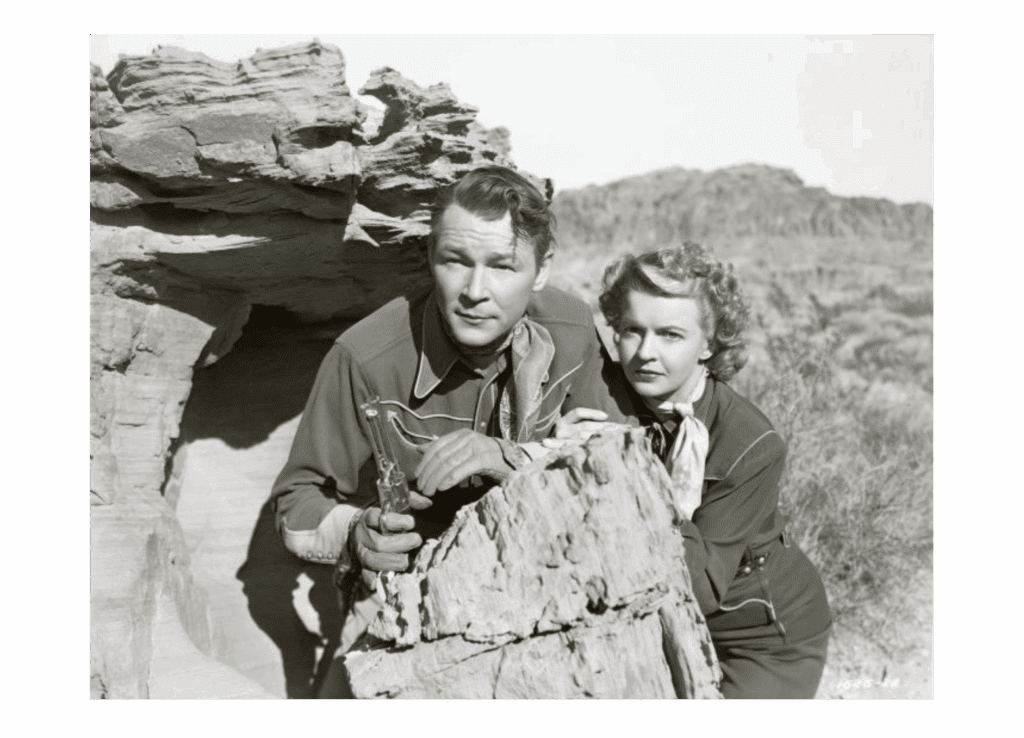
The Cowboys is home to the Roy Rogers & Dale Evans Media Archives in our Dickinson Research Center.
Click here for more info
His sister Mary urged him to overcome his shyness and audition for radio. She sewed him a Western shirt and sent him on his way.
One night in 1931, Len stepped up to the microphone with his guitar and sang for the first time beyond his family’s porch. It was the moment that set him on a path to join the Sons of the Pioneers, star in cowboy movies and become a household name… under a new name.
Today, we tell the story Leonard Franklin Slye — better known as Roy Rogers — who was born this week, Nov. 5, 1911, in Cincinnati, Ohio.
Roy’s journey from a shy amateur singer to the King of the Cowboys spanned five decades, and it all began with that unmistakable yodel. Not long after his first radio appearance, he was invited to join several country bands performing around Los Angeles.
Within a couple of years, he helped form a group called the Pioneers Trio. After a radio announcer joked that they were “too young to be pioneers,” the name Sons of the Pioneers was born — and it stuck.
Thanks to regular spots on national radio, the Sons of the Pioneers — with Roy as their lead singer — quickly gained nationwide fame. Before long, Hollywood took notice and Roy’s story became tangled up with another singing cowboy, Gene Autry.
As we mentioned a few weeks ago in our podcast about Gene Autry, Roy became the new “King of the Cowboys” when Autry went to serve in World War II. That’s when Leonard Slye changed his name: “Roy,” because it sounded like a strong cowboy name, and “Rogers,” after the one and only Will Rogers.
When Roy stepped into the spotlight of his own films, his ascent was nothing short of meteoric. For 16 straight years, from 1939 to 1954, he ranked among the Motion Picture Herald’s Money-Making Western Stars — and from 1943 on, he ruled the list at No. 1.
As Roy’s fame spread, he showed sharp instincts for business. Long before celebrity branding was common, he secured control of his name and image, sparking a wave of Roy Rogers toys, comics, lunch boxes, play sets and even a restaurant chain.
But it took more than charm and a six-shooter to make Roy the King of the Cowboys — two unforgettable co-stars helped seal the deal.
Offered a choice of five rented movie horses for his first starring film, he picked a golden palomino named Golden Cloud, renaming him Trigger for his quickness. Trigger remained Roy’s equine partner for the next 30 years.
Roy met Dale Evans in 1944, and a cowboy courtship followed. He proposed at a rodeo, and they married on New Year’s Eve 1947 at the Flying L Ranch in Davis, Oklahoma, not far from where they had filmed Home in Oklahoma.
They moved from movies into television twice — first with The Roy Rogers Show (1951–57) and later with the 1962 ABC variety hour The Roy Rogers and Dale Evans Show. Each episode famously closed with a song penned by Dale.
INSERT CLIP
“Happy trails to you,
Until we meet again.
Happy trails to you,
Keep smiling until then.”
Roy and Dale were married for just over 50 years, until Roy’s death on July 6, 1998, at age 86.
And with that, we’re pulling the reins on another episode of This Week in the West.
Our show is produced by Chase Spivey and written by Mike Koehler.
Follow us and rate us on Apple Podcasts or wherever you hear us. That helps us reach more people.
You can follow us on social media and online at nationalcowboymuseum.org.
Got a question or a suggestion? Drop us an email at podcast@thecowboy.org
We leave you today with some words from Roy Rogers himself: “I did pretty good for a guy who never finished high school and used to yodel at square dances.”
Much obliged for listening, and remember, come Find Your West at the National Cowboy & Western Heritage Museum.