
Howdy folks, it’s the first week of September 2026, and welcome to This Week in The West.
I’m Seth Spillman, broadcasting from the National Cowboy & Western Heritage Museum in Oklahoma City.
On this podcast, we share stories of the people and events that shaped the history, art and culture of the American West—and those still shaping it today.
It’s surely a point of pride for anyone to have a member of the National Rodeo Hall of Fame in their family.
But very few families can say they have another Hall of Famer. And another. And another. And another. And another. And another. And another.
Yes, out in Western Oklahoma there’s a whole family of folks who have helped shape professional rodeo for nearly a century.
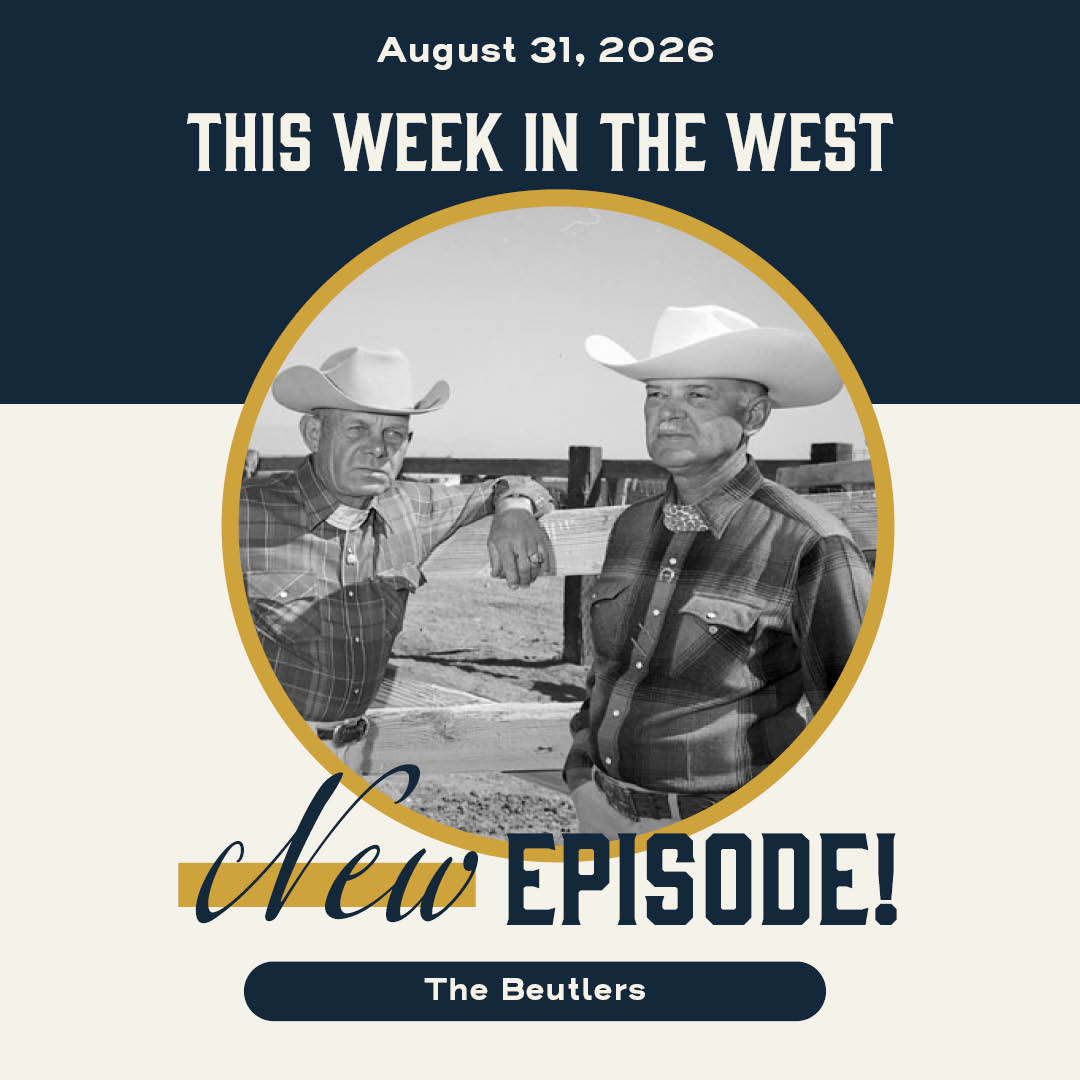
This week, as Elk City celebrates its Rodeo of Champions, we meet the Beutler family—the hometown dynasty that helped build modern professional rodeo.
The Beutler story begins more than 100 years ago, not too far from where rodeo fans and competitors will gather this weekend.
John Beutler made the famous Oklahoma Land Run of 1889, homesteading near Okarche in Oklahoma Territory before eventually settling on a ranch north of Elk City. There, the brothers—Elra, Jake and Lynn—learned ranch work the old-fashioned way, growing up around horses, cattle and hard work.
Then, in 1924, Jake and Lynn saw their first rodeo in Canadian, Texas, and decided the pageantry and excitement were something they wanted to be part of.
In 1929, organizers of the Custer County Fair Rodeo in nearby Clinton asked if the brothers could bring ten bucking horses from the ranch.
They loaded the horses, made the trip to Clinton and earned $150: a respectable payday during the early days of the Great Depression.
They also saw the makings of a business. That year, the three brothers formed the Beutler Brothers Rodeo Company.
It was a humble beginning, but the brothers possessed exactly the combination of talents the growing sport needed.
Elra understood livestock.
Jake handled the stock and transportation.
And Lynn proved to be an extraordinary promoter and negotiator. He was a man who could spot opportunity almost as well as he could spot a bucking horse.
The Beutlers arrived just as rodeo was becoming more organized. Events were getting bigger, crowds were growing and rodeo committees wanted better livestock—animals that could challenge the best cowboys and put on a show for the fans.
The Beutlers delivered.
They had an uncanny eye for roughstock—the kind of bulls and broncs that could separate the truly great cowboys from everyone else.
One rodeo authority famously observed: “Beutlers’ stock was a cowboy’s nightmare.”
For the fans, that was exactly what they wanted.
Some of the Beutlers’ animals became celebrities in their own right.
There was Tom Dooley.
Wild Bill.
Sam Bass.
King Tut, whose memorable bucking performances would later appear every week during the closing credits of the television series Stoney Burke.
Then there was Speck.
Speck wasn’t just another Brahma bull.
He became one of the most feared bulls in the Beutler string.
During his first five years in competition, cowboys attempted to ride him 103 times.
Only one managed to stay on for the full eight seconds.
Later, a palomino gelding named Descent became the Beutlers’ most celebrated animal, earning Bucking Horse of the Year honors a record six times.
As their reputation grew, so did their business.
By the early 1950s, the Beutlers made perhaps the most important business decision in rodeo history.
In 1952, they bought out Verne Elliott, widely known as “Mr. Rodeo” and one of the nation’s premier rodeo producers and stock contractors.
The deal took the Beutlers from a regional operation to the national stage.
Cheyenne Frontier Days.
The National Western Stock Show in Denver.
The Pikes Peak or Bust Rodeo.
Major rodeos from Texas to Idaho.
By the middle of the decade, the Beutler Brothers had become the largest rodeo livestock contractors in the United States, producing more than twenty of the country’s premier rodeos.
Their influence extended far beyond livestock.
Lynn Beutler helped convince rodeo leaders that professional rodeo needed a championship event featuring the season’s best contestants and best stock.
Working with rodeo executives and sponsors, he helped lay the groundwork for what became the very first National Finals Rodeo, held in Dallas in 1959.
Longtime rodeo announcer Pete Logan once remarked that it would be entirely fitting to recognize Lynn Beutler as the “Father of the National Finals Rodeo.”
But perhaps nowhere is the Beutler legacy more deeply rooted than back home in Elk City.
In 1937, local businessman P. P. Ackley donated land for what became Ackley Park.
With assistance from the Works Progress Administration during the Great Depression, workers constructed a native-stone stadium that still stands today.
When it opened in October 1939, the very first rodeo held there was produced by the Beutler Brothers.
That event became the Elk City Rodeo of Champions.
More than eight decades later, it remains an enduring Labor Day weekend tradition in western Oklahoma.
Although today’s performances take place in nearby Beutler Brothers Arena, they’re still held beside that historic stone stadium where it all began—a fitting reminder that some traditions don’t need to change very much to remain meaningful.
The original partnership eventually split. Elra continued in rodeo production and, with his son Jiggs, formed Beutler & Son Rodeo Company, carrying the family business into a new generation.
Today, five generations of Beutlers have been part of the rodeo business. Beutler & Son continues under Bennie and Rhett Beutler, with another generation carrying the name forward.
And many of their names are etched into history at The National Rodeo Hall of Fame here at The Cowboy.
Lynn, Elra and Jake are all members of the Hall, as are Elra’s son Jiggs and Jiggs’ son Bennie.
In 2024, Jiggs’ daughters, Dollie Beutler Riddle and Vickie Beutler Shireman, joined them in the Hall, recognized for decades of work as rodeo secretaries, timers and, in Dollie’s case, trick riding. Dollie is married to Rocky Riddle, who also happens to be a member of the National Rodeo Hall of Fame.
And with that, we’ll close the chute on another episode of “This Week in The West.”
Our show is produced by Chase Spivey and written by Mike Koehler.
Follow us and rate us on Apple Podcasts or wherever you hear us. That helps us reach more people.
Come visit us in Oklahoma City! You can now buy tickets online at thecowboy.org/tickets
Got a question or a suggestion? Drop us an email at podcast@thecowboy.org
We leave you today with the words of Bennie Beutler, who was interviewed by The Oklahoman newspaper in 2012 about his family: “My granddad always said you need to be on the purse side of the table. If you are a stock contractor, you get a check every week. If you are rodeoing, you might get a check every month.”
Much obliged for listening, and remember, come Find Your West at the National Cowboy & Western Heritage Museum.